
Meshy AI: review, pricing and alternatives
What is Meshy AI?
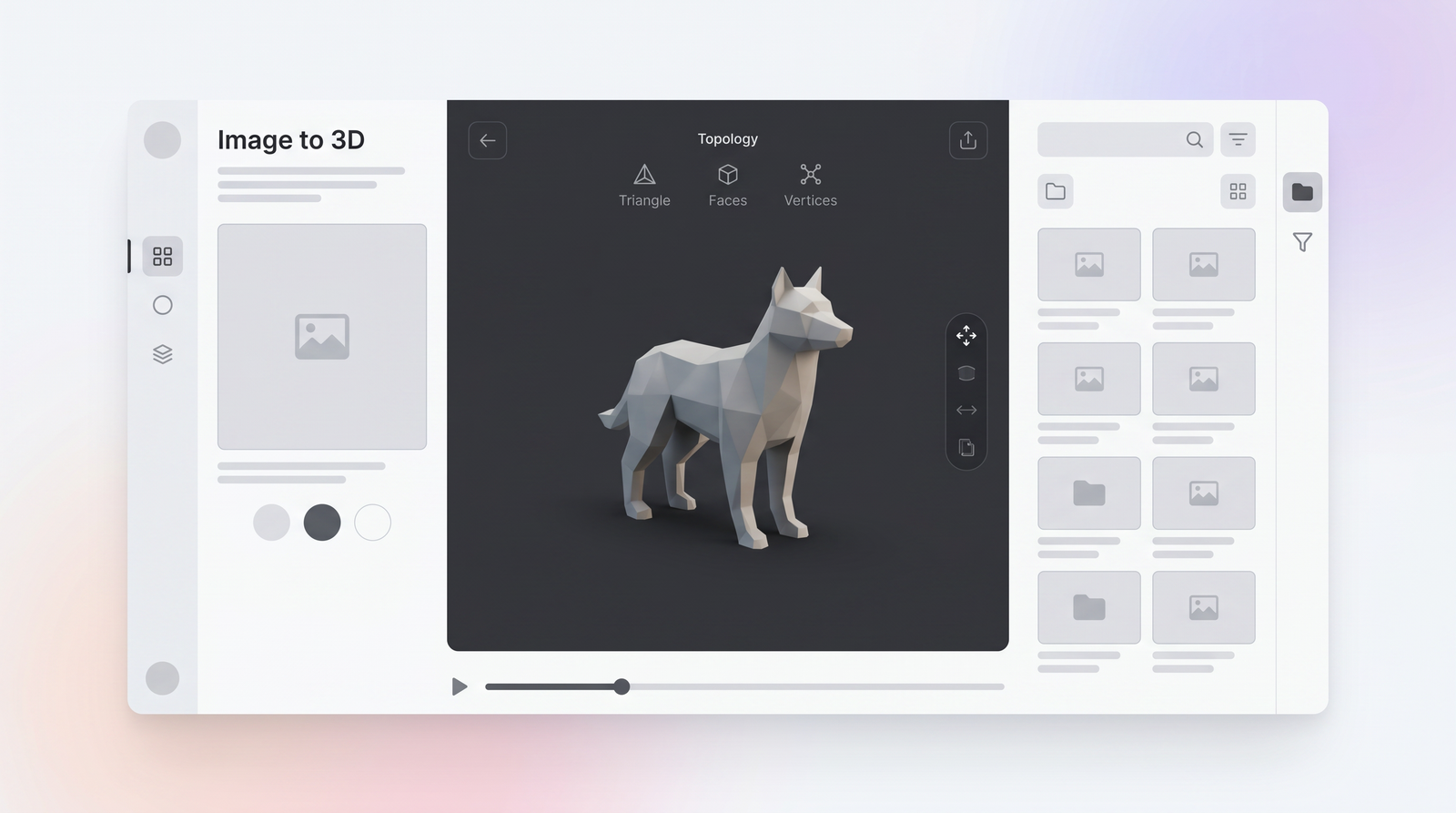
When I first encountered Meshy AI, it immediately struck me as a tool with a clear mission: to democratize 3D creation. Launched in 2021, Meshy positions itself as a generative AI platform designed to transform simple text descriptions or 2D images into complex 3D models. The core idea here is accessibility – taking the often-intimidating world of 3D modeling, with its steep learning curves and specialized software, and making it approachable for a much wider audience.
For years, creating high-quality 3D assets required significant artistic skill, technical know-how, and a considerable time investment. Meshy AI steps in as a potential game-changer, promising to bridge that gap. Its purpose isn't necessarily to replace seasoned 3D artists, but rather to empower creators who might not have those specialized skills, or to dramatically speed up the initial phases of asset generation for those who do.
The platform aims to simplify the entire process, allowing users to articulate their vision in plain language or provide a reference image, and then let artificial intelligence do the heavy lifting of sculpting and texturing a 3D model. This focus on ease of use and rapid prototyping is what really defines Meshy AI's place in the burgeoning generative AI landscape, offering a glimpse into a future where 3D content creation is as straightforward as typing a sentence.
Key Features and Capabilities
Diving into Meshy AI, what immediately stands out are its core functionalities, which are thoughtfully designed to cover various starting points for 3D generation. The platform isn't a one-trick pony; it offers several distinct methods to bring your ideas into the third dimension, each catering to different creative needs. The most prominent of these is its text-to-3D capability, which allows you to describe your desired object using natural language prompts. I've found this particularly useful for brainstorming or generating initial concepts when I only have a vague idea in mind.
Beyond text, Meshy also shines with its image-to-3D feature. This is incredibly valuable when you have a specific visual reference – perhaps a sketch, a photograph, or concept art – that you want to transform into a 3D model. Instead of trying to describe every nuance, you can simply upload your image, and Meshy attempts to extrapolate the 3D form from it. This method often yields more predictable results when you have a clear visual target.
Another impressive feature, and one that users consistently praise, is Meshy's AI texturing. Generating a model is one thing, but applying realistic and high-quality textures can be just as time-consuming. Meshy's AI texturing capabilities can automatically generate and apply textures that align with your prompt or image, significantly cutting down on post-processing work. For those on paid tiers, Meshy also boasts the ability to generate higher-polygon models, with some users reporting models up to 100,000 polygons. This is a crucial distinction, as higher poly counts generally translate to more detailed and smoother models, making them more suitable for professional applications like game development or high-fidelity renderings.
How Meshy AI Works: Getting Started
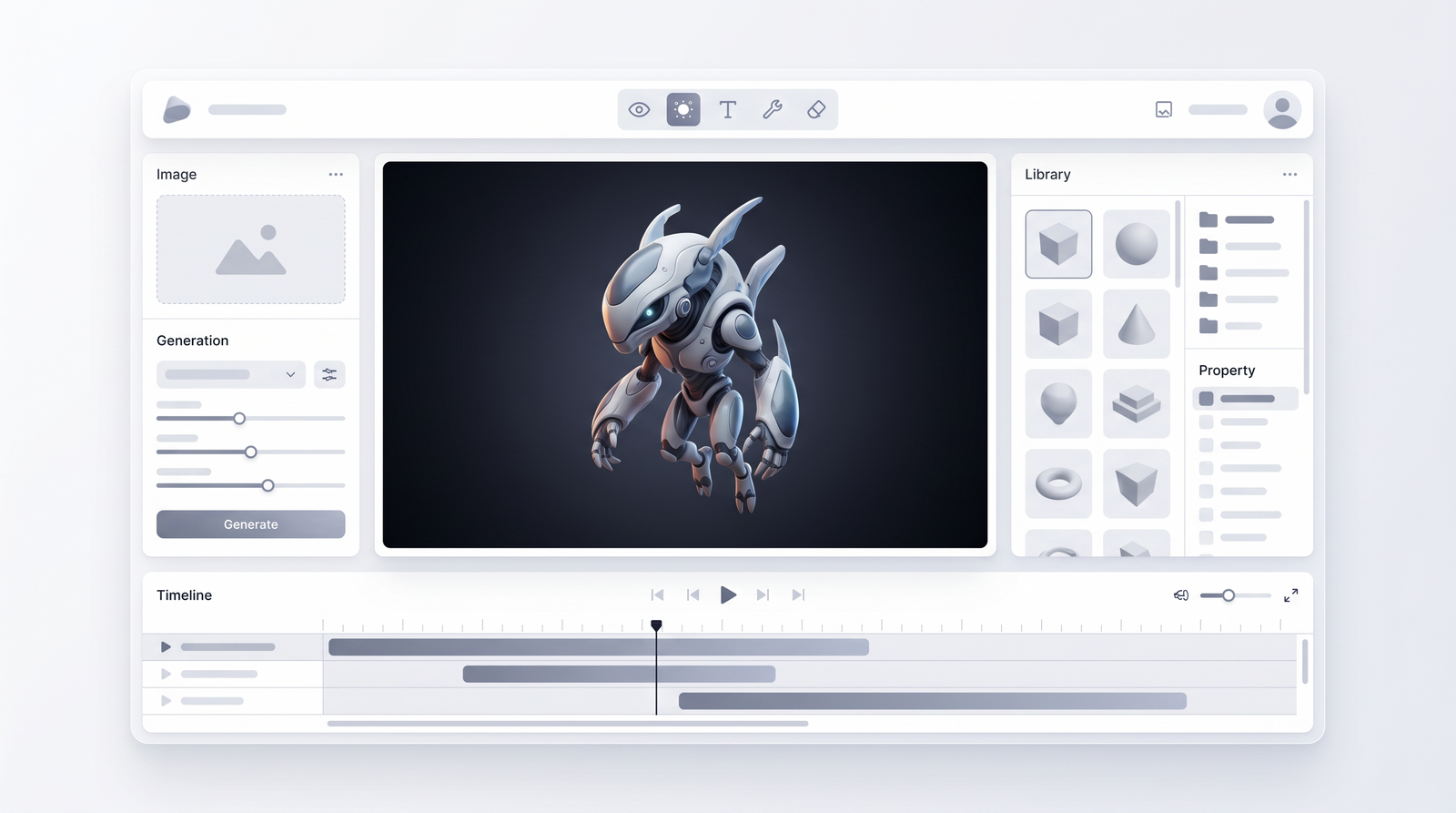
Getting started with Meshy AI is surprisingly straightforward, which is definitely one of its strong suits. The general workflow is designed to be intuitive, even for those who are new to generative AI or 3D modeling in general. When you first log in, you're usually presented with clear options for your generation method, whether it's text-to-3D or image-to-3D. The interface is clean and user-friendly, minimizing friction and allowing you to jump straight into creation.
Once you've chosen your method, the process typically involves inputting your prompt or uploading your image. For text-to-3D, you'll want to be as descriptive as possible, guiding the AI toward the specific object you envision. For image-to-3D, a clear, well-lit image with good contrast usually yields the best results. After submitting your request, Meshy's AI gets to work, and this is where its renowned speed often comes into play, delivering a preliminary model in a matter of minutes.
It's important to understand that Meshy operates on a credit-based system. Each generation, whether it's a new model or a re-texturing, consumes a certain number of credits from your account. This system makes the cost predictable for casual use, but it's something to keep in mind if you anticipate a high volume of generations or extensive experimentation. You'll quickly learn to balance your creative impulse with your credit balance, making each generation count. The user-friendly interface, combined with this credit system, makes it easy to track your usage and manage your projects.
Performance: Speed and Quality
When I evaluate generative AI tools, performance is always a critical factor, and Meshy AI certainly has some notable strengths and weaknesses in this area. Where Meshy truly shines, and what many users consistently praise, is its exceptional generation speed. I've personally experienced it producing initial 3D models in minutes, which is a significant advantage for rapid prototyping or simply exploring a wide range of ideas quickly. This speed alone can be a game-changer for iterative design processes, allowing you to cycle through concepts much faster than traditional modeling methods.
Another area where Meshy performs impressively is its AI texturing capabilities. The textures generated are often of high quality and can add a surprising level of realism to the models right out of the gate. This feature dramatically reduces the need for manual texturing in external software, which is a huge time-saver and a major boon for creators without specialized texturing skills. The combination of quick model generation and effective texturing means you can get a visually complete asset ready for review in a very short timeframe.
However, this speed and convenience do come with a caveat: unpredictability of results. While Meshy can produce impressively close results, it's not always perfect. I've found that the output quality can be inconsistent, and it's common to get models that, while recognizable, might have artifacts, uneven geometry, or features that don't quite align with the prompt. This leads to the almost universal consensus that Meshy AI-generated models often require post-generation cleanup. For professional-grade assets, you'll likely need to import the model into a dedicated 3D modeling software like Blender to refine the mesh, fix errors, or optimize the topology. So, while Meshy gets you 90% of the way there incredibly fast, that last 10% often requires manual intervention.
Pricing and Plans
Understanding Meshy AI's pricing structure is crucial for anyone considering integrating it into their workflow, especially given its credit-based system. The platform operates on a model where each generation consumes a certain number of credits, meaning your costs are directly tied to your usage. While the exact credit consumption varies by generation type and complexity, the overall pricing strategy aims to be flexible, offering various tiers to accommodate different levels of activity.
Based on what I've seen, the stated price range for credit packages typically falls between $16 and $60. This range allows for a certain degree of scalability, from casual users experimenting with the technology to more dedicated creators or small teams. It's not a subscription for unlimited generations, but rather a purchase of a credit bundle that you then spend down. This can be beneficial for those who only need to generate models periodically, as they're not locked into a recurring monthly fee for unused capacity.
However, a key consideration is how quickly these costs can accumulate, particularly for larger or more frequent projects. If you're undertaking a project that requires extensive iteration, multiple variations, or a high volume of asset creation, you might find yourself purchasing credit bundles more often than anticipated. While the per-generation cost might seem small, a heavy workflow can quickly add up, so it's wise to budget accordingly and monitor your credit usage closely. Below is an illustrative table of potential plans, based on the general price range observed:
| Plan | Price | Best for |
|---|---|---|
| Starter Pack | $16 | Casual users, initial exploration, small personal projects |
| Creator Bundle | $35 | Regular artists, indie developers, moderate asset generation |
| Pro Package | $60 | Game studios, frequent users, high-volume asset creation |
Pros and Cons of Meshy AI
After spending time with Meshy AI, I’ve developed a pretty clear picture of its strengths and weaknesses. On the positive side, what consistently impresses me, and many other users, is its unparalleled speed. The ability to generate a rudimentary 3D model in just a few minutes is a massive advantage, especially for rapid prototyping or quickly visualizing concepts. This speed makes it an excellent tool for iterating through ideas without the usual time commitment of traditional 3D modeling.
Coupled with its speed, Meshy is also praised for being remarkably user-friendly. The interface is intuitive, and the process of inputting prompts or uploading images is straightforward, making it accessible even for those with no prior 3D modeling experience. Furthermore, its effective AI texturing is a standout feature, often producing surprisingly good textures that add a layer of polish to the generated models, reducing the need for extensive post-processing in external software.
Meshy AI is a fantastic tool for getting 3D assets quickly, but you need to go in knowing it's often a starting point, not a final product.
However, it's not without its drawbacks. The most significant criticism I've encountered, and experienced myself, is the inconsistent output quality. While some generations can be remarkably good, others might be riddled with geometric errors, strange artifacts, or simply not quite match the prompt. This unpredictability means you can't always rely on Meshy to deliver a perfect, production-ready model. Consequently, the necessity for model refinement and cleanup in dedicated 3D software is a recurring theme. For professional applications, you'll almost certainly need to spend time optimizing the mesh and fixing errors. Lastly, while the credit system offers flexibility, the costs can accumulate quickly if you're doing a lot of experimentation or high-volume work, which can be a point of frustration for some.
Who is Meshy AI For? Use Cases
Meshy AI, with its unique blend of speed and accessibility, carves out a niche for itself across several creative disciplines. From my perspective, it's not a tool for everyone, but it’s incredibly powerful for specific groups and use cases. One primary target audience is undoubtedly artists and designers who need to quickly visualize ideas or create placeholders. Imagine sketching a concept and instantly turning it into a basic 3D form to see how it looks from different angles – Meshy makes that possible in minutes.
Game developers, especially indie studios or those working on rapid prototypes, will find Meshy to be an invaluable asset. The ability to generate game-ready (or near game-ready) assets like props, environmental elements, or even basic character models with minimal effort can drastically accelerate the early stages of game development. I’ve seen it mentioned frequently in communities like r/unity, highlighting its relevance for developers working within game engines. This quick asset creation allows developers to focus more on gameplay and less on the tedious initial modeling.
Furthermore, 3D printing enthusiasts and makers can leverage Meshy for rapid design iteration. While generated models might require cleanup for optimal printability, the speed of generation allows for quick experimentation with shapes and forms before committing to detailed modeling. It’s also beneficial for anyone looking to populate virtual worlds or build out scenes for presentations without having to commission or painstakingly create every single object from scratch. In essence, if your goal is rapid asset creation, prototyping, or simply exploring creative ideas in 3D without a massive time investment, Meshy AI is definitely worth considering.
Meshy AI vs. Alternatives
The landscape of AI 3D generation tools is rapidly expanding, with new players emerging regularly. When I look at Meshy AI in comparison to its alternatives, a few key distinctions come to light. Many other tools offer similar text-to-3D or image-to-3D capabilities, but Meshy often distinguishes itself primarily through its generation speed. As I've mentioned, the ability to get a model back in minutes is a significant competitive edge, allowing for faster iteration and exploration than some other platforms.
However, this speed often comes with a trade-off, particularly in terms of consistency and raw output quality. While Meshy's results can be impressive, other tools might prioritize more refined, consistent, or higher-fidelity outputs, albeit at a slower generation pace or with a steeper learning curve. Some alternatives might also offer more advanced editing tools within their platforms, or better integration with professional 3D software, reducing the need for extensive external cleanup.
When I consider how Meshy AI stacks up against its competitors, especially in terms of its unique speed advantage, it's always good to check comprehensive data, and you can see how it compares against alternatives on Top10k for a broader market perspective. Ultimately, the choice between Meshy and an alternative often boils down to your specific needs: do you prioritize blazing-fast concept generation and are willing to do some post-processing, or do you need higher out-of-the-box quality and consistency, even if it means waiting a bit longer?
The Verdict: Is Meshy AI Worth It?
So, after exploring its features, performance, and place in the market, the ultimate question remains: is Meshy AI worth it? My verdict is nuanced, but largely positive, especially for specific use cases. Meshy AI certainly delivers on its promise of making 3D creation more accessible and significantly faster. For anyone in need of rapid 3D asset generation, quick prototyping, or simply exploring creative ideas in a three-dimensional space without the commitment of traditional modeling software, Meshy AI is an incredibly valuable tool.
Its speed, user-friendly interface, and impressive AI texturing capabilities are genuine strengths that can accelerate workflows for artists, game developers, and 3D printing enthusiasts. It's a fantastic starting point for creating meshes and textures, allowing you to quickly populate scenes or get a visual representation of your concepts in minutes. This alone can save countless hours in the early stages of a project.
However, it’s crucial to set realistic expectations. While Meshy can produce remarkably good results, the likelihood of needing further processing for professional-grade results is high. Don't expect every generation to be a perfect, production-ready model straight out of the box. Artifacts, inconsistent geometry, and the need for mesh optimization are common. If you approach Meshy AI as a powerful first step, a rapid concept generator, or an efficient way to create placeholder assets that you'll later refine in a dedicated 3D modeling program, then it absolutely delivers on its value proposition. It's not a magic bullet to replace expert 3D artists, but it's an excellent assistant for anyone looking to inject speed and accessibility into their 3D workflow.
Full profile and live ranking: https://top10k.com/ai/meshy-ai
Published by

Top10k Tools is a suite of online utilities providing thousands of free online tools built to save time on routine tasks.
It brings together everything from SEO and coding to file converters, image tools, and handy calculators. All tools are free and browser-based, making them quick to access anywhere.
The long-term vision is reaching 10,000 useful web tools covering nearly every everyday task.
Great for marketers, coders, students, and entrepreneurs, there's likely a tool that fits. Jump in and start exploring.
Frequently asked questions
What is Meshy AI used for?
Meshy AI is primarily used for generating 3D models from text descriptions or 2D images. It's popular among artists, game developers, and 3D printing enthusiasts for rapid prototyping, quick asset creation, and making 3D content more accessible without extensive modeling skills.
Is there a free version of Meshy AI?
While the review does not explicitly state a free version, Meshy AI operates on a credit-based system. Many such platforms offer a limited number of free credits upon signup, or a trial period, to allow users to test the service before committing to a paid plan. You'd typically need to purchase credits for continued or extensive use.
How much does Meshy AI cost?
Meshy AI uses a credit-based pricing model, with credit packages generally ranging from $16 to $60. The exact cost depends on the amount of credits purchased and how frequently you generate models, as each generation consumes credits.
What are the main advantages of Meshy AI?
Meshy AI's main advantages include its exceptional generation speed, user-friendly interface, and impressive AI texturing capabilities. It allows for rapid creation of 3D models and textures, significantly speeding up the prototyping and asset generation process.
What are the limitations of Meshy AI?
The primary limitations of Meshy AI are the unpredictability and inconsistency of its output quality. Generated models often require post-generation cleanup and refinement in dedicated 3D software to achieve professional-grade results. Additionally, the credit-based system can lead to accumulating costs for frequent users.
Can Meshy AI models be used for 3D printing?
Yes, Meshy AI models can be used for 3D printing. However, due to the occasional inconsistencies in generated geometry, models often require cleanup and optimization in a separate 3D modeling program to ensure they are manifold and watertight for successful 3D printing.
Is Meshy AI suitable for beginners?
Absolutely. Meshy AI's user-friendly interface and straightforward workflow make it highly suitable for beginners who are new to 3D modeling. It lowers the barrier to entry, allowing individuals without specialized skills to generate and experiment with 3D content easily.